

Breaking News!! How exciting is this! In recognition of the great work Friends of Tawa Bush Reserves are doing for the community and all the amazing volunteers Friends of Tawa Bush has received a well-deserved nomination and made a Finalist in the Wellington Regional Community Awards for 2024! Go the Friends of Tawa Bush Reserves!!Continue reading “Wellington Airport Regional Community Awards 2024 Finalist – Wellington City”
Author Archives: Friends of Tawa Bush
Know the native flora in Tawa reserves – Whauwhaupaku, five finger, Pseudopanax arboreus & Patē, seven finger, Schefflera digitata – (from Gil Roper’s writings)
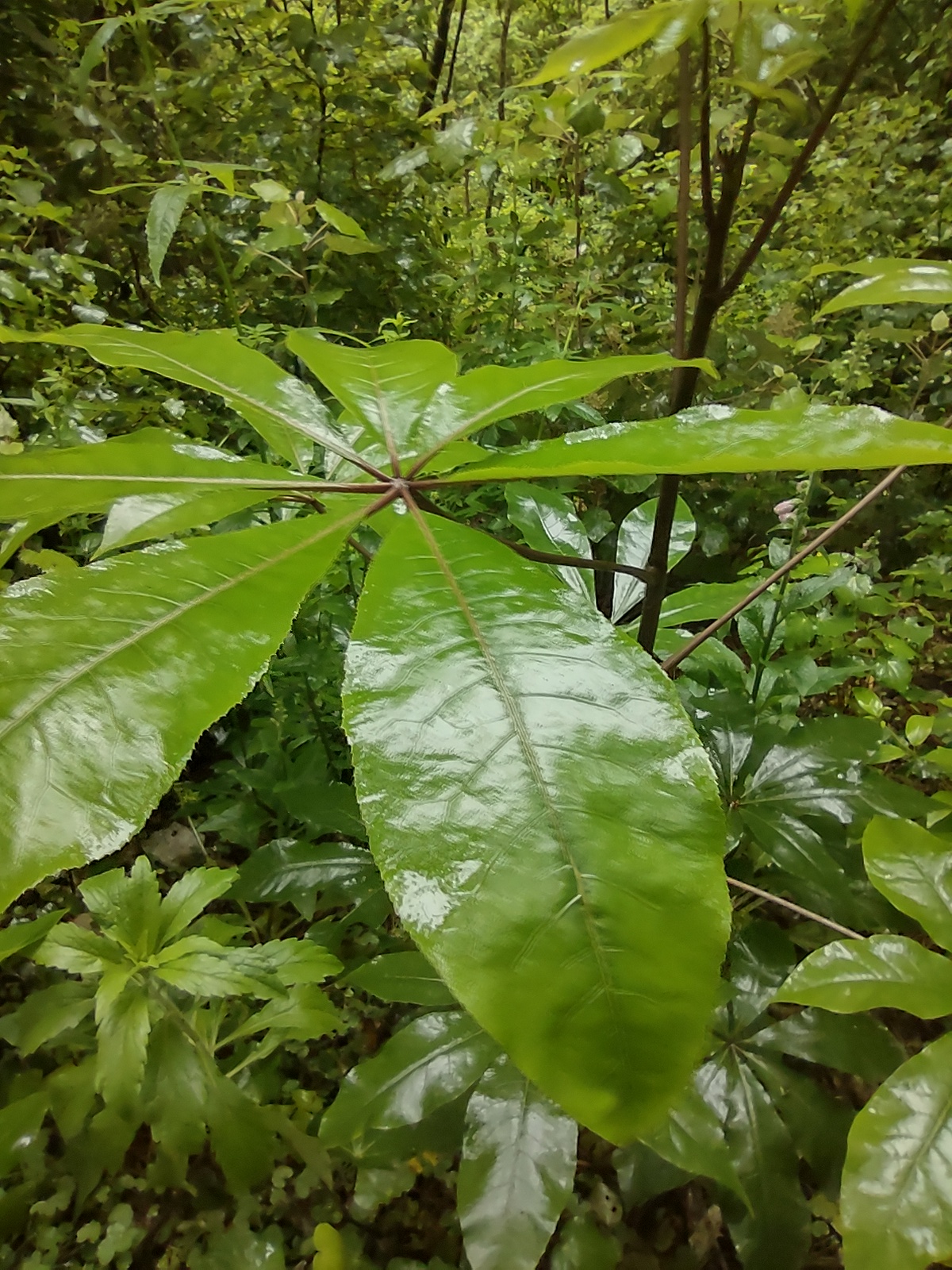
These are both common trees in the understorey layer. Though similar in appearance, they can be distinguished by their leaf texture and their leaf margins. Although the names imply seven or five leaflets respectively, this number can vary. The texture of five-finger leaves is thicker and leathery with a glossy appearance and well-defined teeth atContinue reading “Know the native flora in Tawa reserves – Whauwhaupaku, five finger, Pseudopanax arboreus & Patē, seven finger, Schefflera digitata – (from Gil Roper’s writings)”
AGM Report (from Damian Hewett)
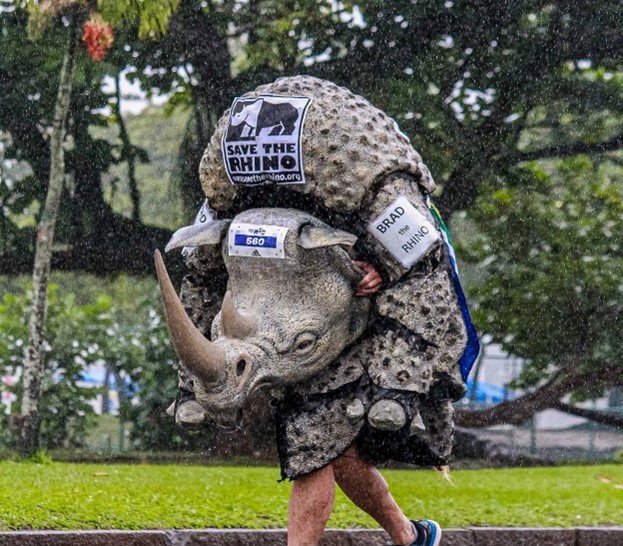
On 13 March 2024, the newly appointed WCC Open Spaces and Parks Manager Dr. Bradley Schroder spoke to a large group member and at our AGM. He has managed Reserves and National Parks in South Africa, Mozambique, Botswana, Australia, and New Zealand. He talked us through his South African conservation career from guiding tourists throughContinue reading “AGM Report (from Damian Hewett)”
Know the native flora in Tawa reserves – Kōwaowao, pāraharaha, hound’s tongue, Microsorium pustulatum(from Gil Roper’s writings)
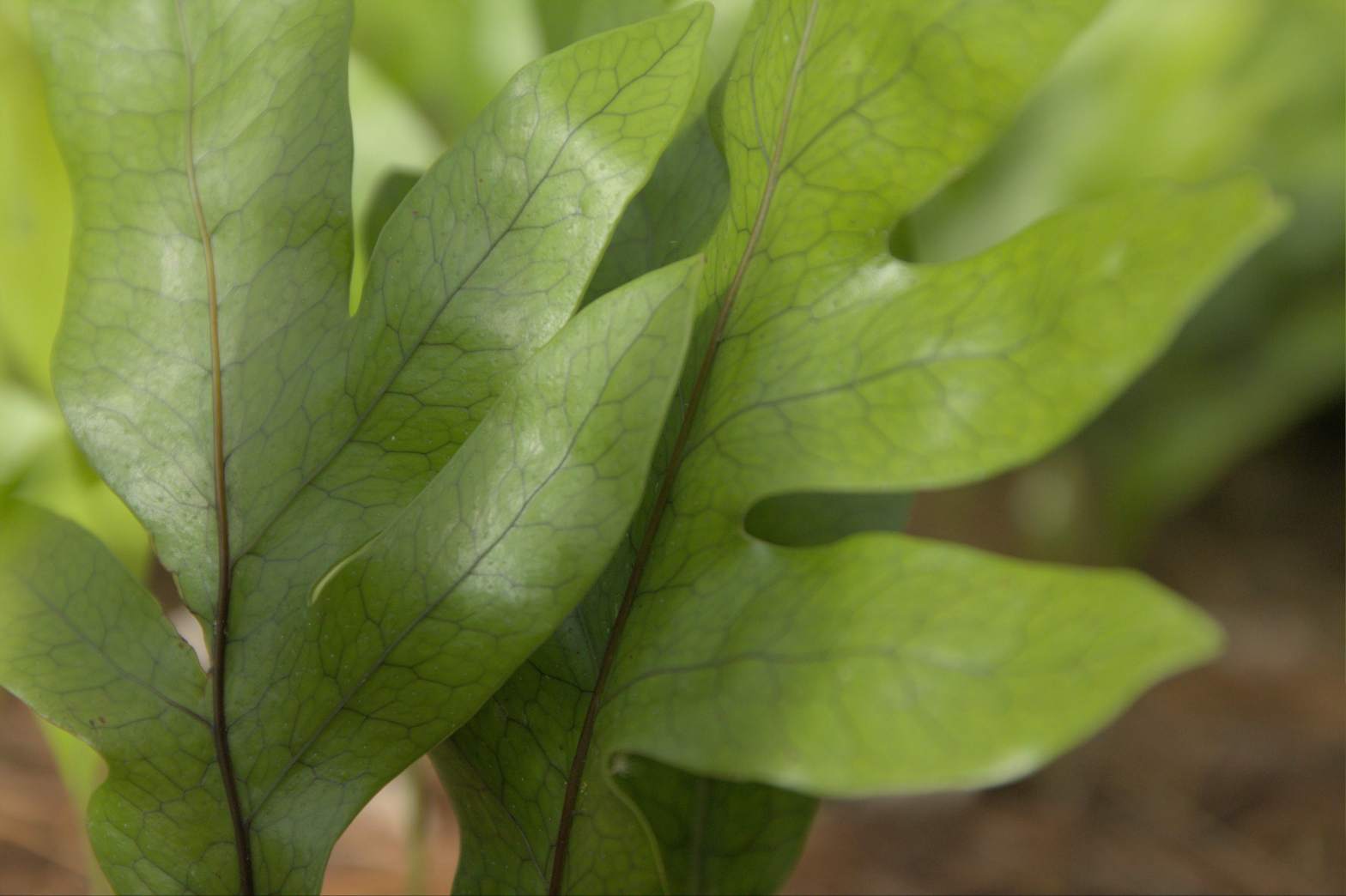
Kōwaowao, Microsorium pustulatum spreads over the ground using creeping horizontal stems (rhizomes) from which erect fronds grow out and extend upwards. The glossy, lime green, leathery fronds will often be on tree trunks when the rhizomes have extended their growth upwards from the ground to form an epiphyte on the tree. At maturity, the undersidesContinue reading “Know the native flora in Tawa reserves – Kōwaowao, pāraharaha, hound’s tongue, Microsorium pustulatum(from Gil Roper’s writings)”
Know the native flora in Tawa reserves – Mokimoki, fragrant fern, Microsorium fragrans (from Gil Roper’s writings)
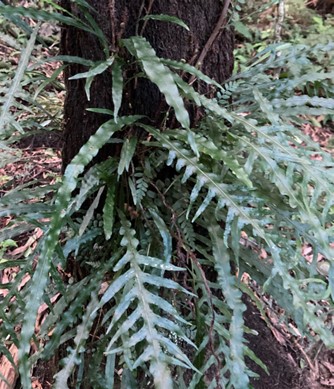
Source of names: The genus Micro is from the Greek mikrós meaning ‘small’, while sorium refers to the ‘sori’ that appear as raised brown, powdery mounds on the underside of mature fronds. Sori produce clusters of sporangia and when mature, as they dry out, the sporangia fling out an abundance of spores for reproduction. TheContinue reading “Know the native flora in Tawa reserves – Mokimoki, fragrant fern, Microsorium fragrans (from Gil Roper’s writings)”
Working bee Update – Tawa Station Park‘n’Ride restoration area
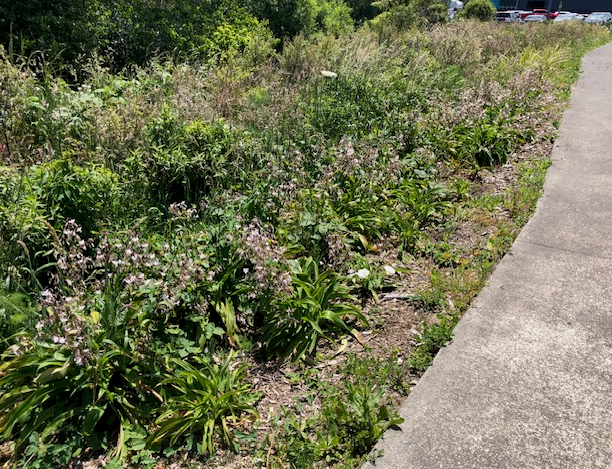
One of the projects that Friends of Tawa Bush Reserves has been involved over the past couple years is an area adjacent to the Porirua Stream and besides the Tawa rail station “park‘n’ride” area off Melville Street. For many years this area has appeared as a bit of a wasteland overgrown with blackberry andContinue reading “Working bee Update – Tawa Station Park‘n’Ride restoration area”
Nursery Working Bee a huge success

Joanne Youthed reports on the latest working bee down at the nursery, where there’s good things happening! We had a fabulous day at the nursery today, with a great turn out and about 300 plants potted up into PB3 bags! John and Andrew took 400 plants up to the top of Te Ngahere o TawaContinue reading “Nursery Working Bee a huge success”
KETE Project update
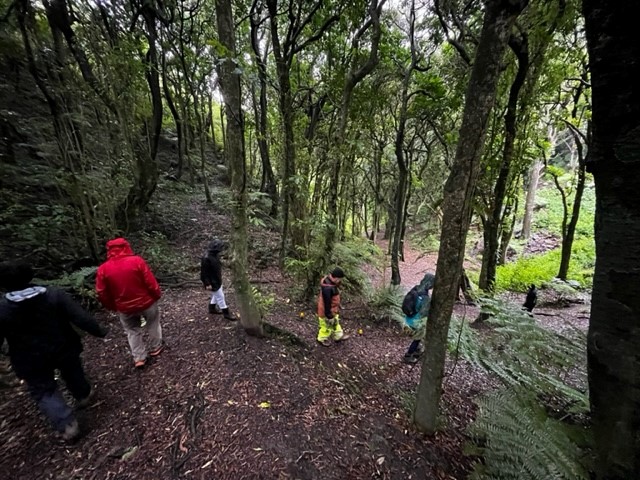
Here is a great encouraging update from Sue Lum regarding the Kete project and Friends of Tawa Bush: …At the end of term one, Link teachers from each of our Tawa schools joined myself and Joanne Youthed on a bushwalk in Wilf Mexted Reserve to learn about seed collection, followed by an introduction to theContinue reading “KETE Project update”
Resurgence of kererū numbers in Tawa reserves
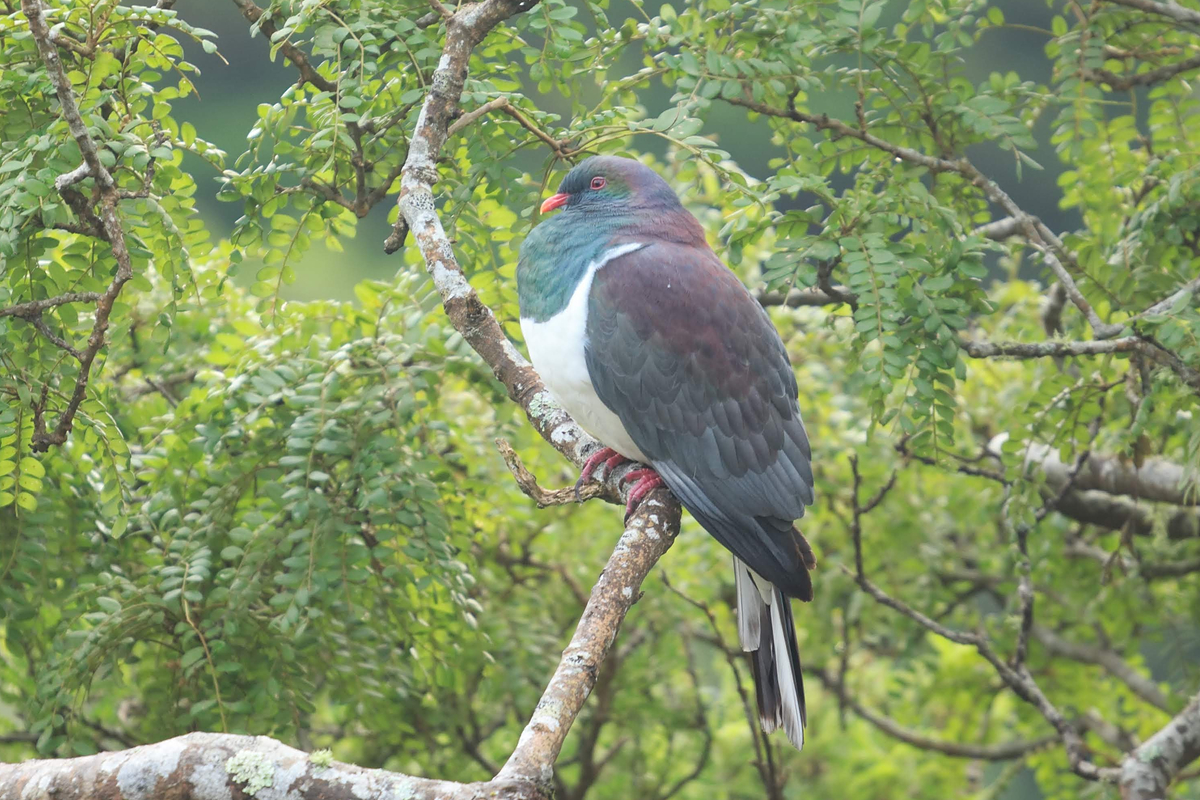
Seeds from many native trees rely on kererū for dispersal. With the extinction the huia and moa, kererū are the only native birds with a wide enough mouth to swallow large fruit. These include fruit of karaka, pūriri, taraire and tawa. The North Island kokako can also consume these fruit but their natural distribution doesContinue reading “Resurgence of kererū numbers in Tawa reserves”
Know the native trees in Tawa reserves with Gil Roper – Brachyglottis repanda, Rangiora
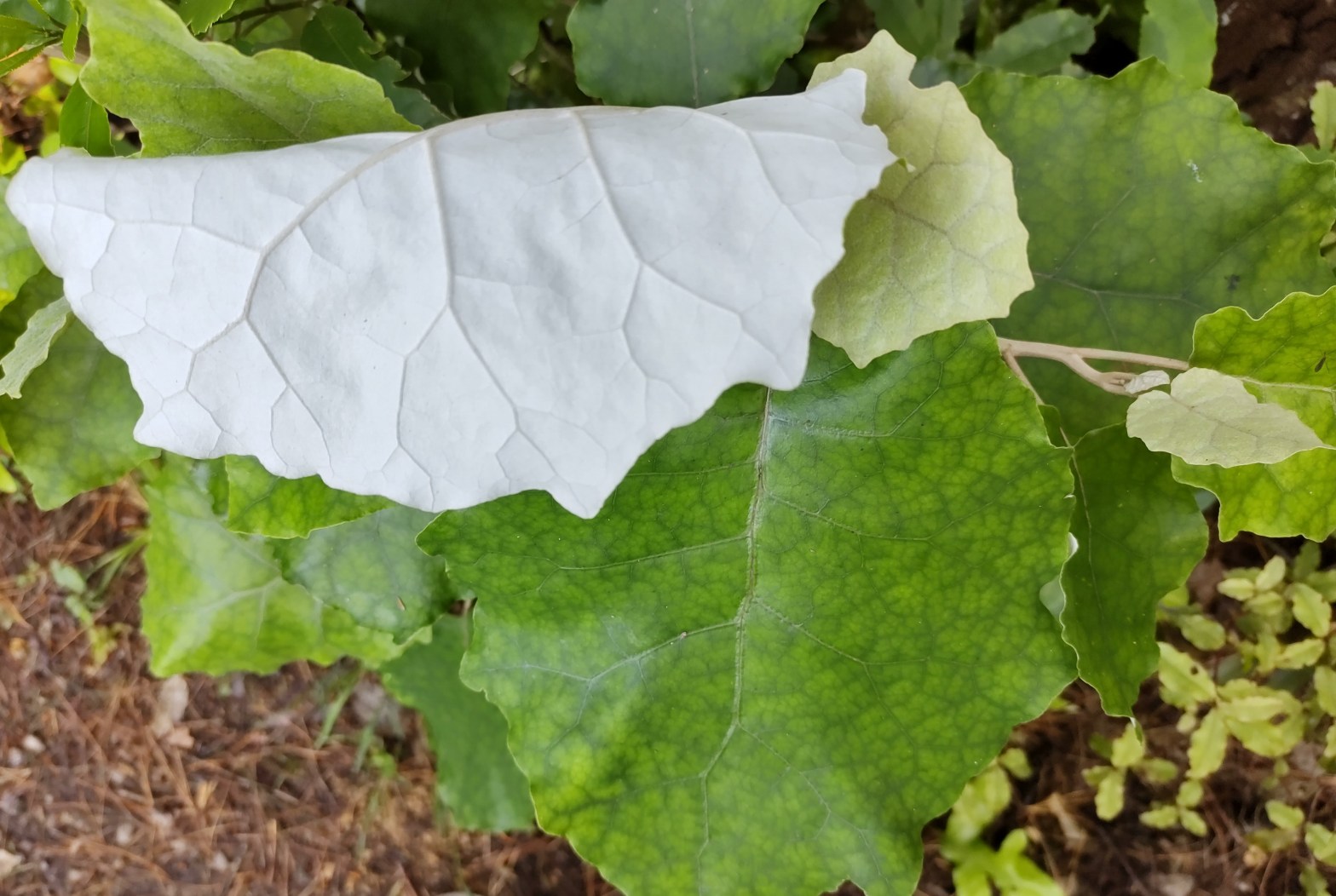
Source of names: Rangiora is a member of the Aster family of plants (Asteraceae) and includes asters, daisies and sunflowers. Brachyglottis means ‘short tongue’ and refers to the small size of the ray florets within the flowers. The species name repanda means ‘undulating edges’ and refers to the margins of the broad leaves. The MāoriContinue reading “Know the native trees in Tawa reserves with Gil Roper – Brachyglottis repanda, Rangiora”
 Friends of Tawa Bush Reserves