
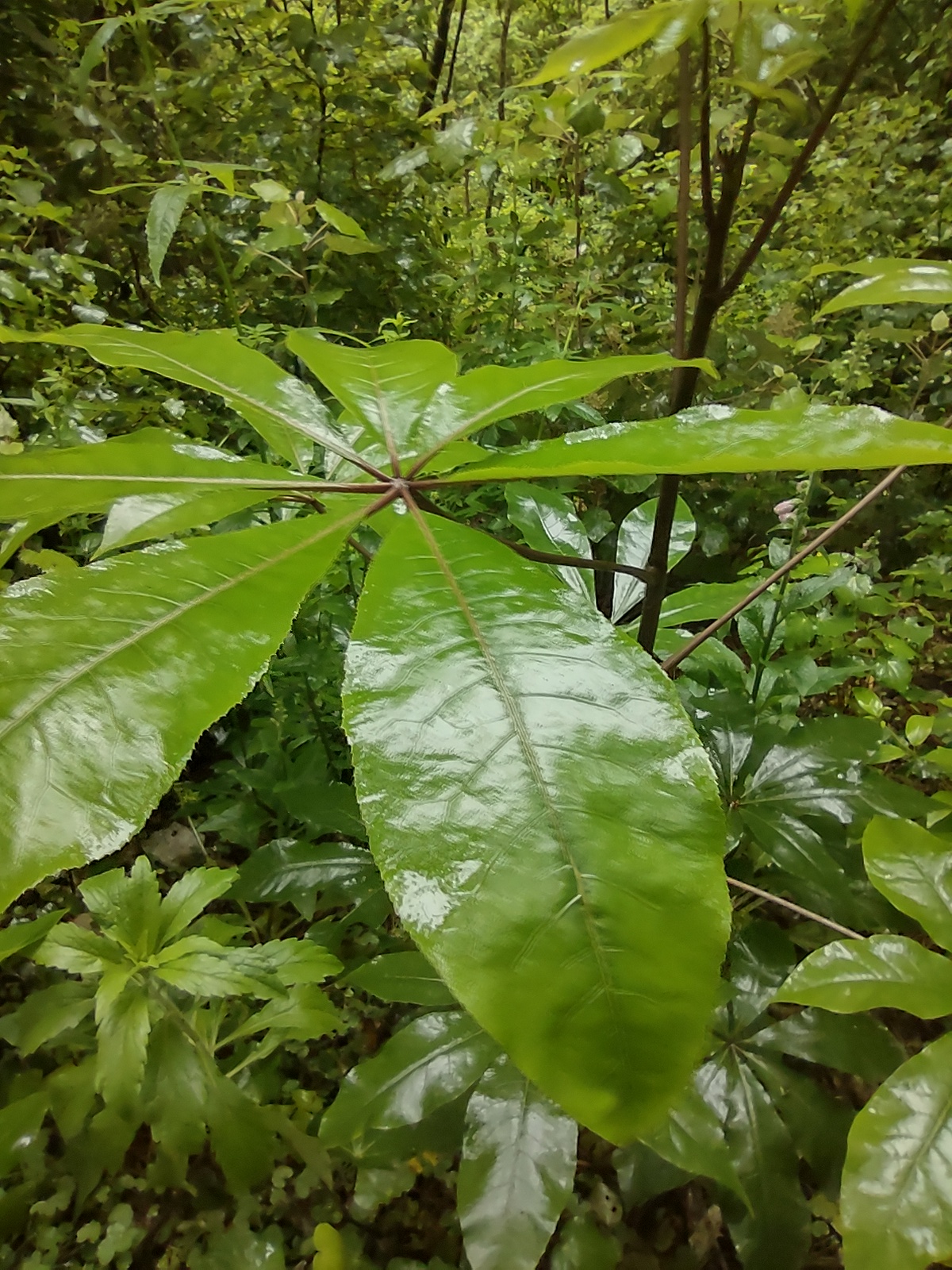
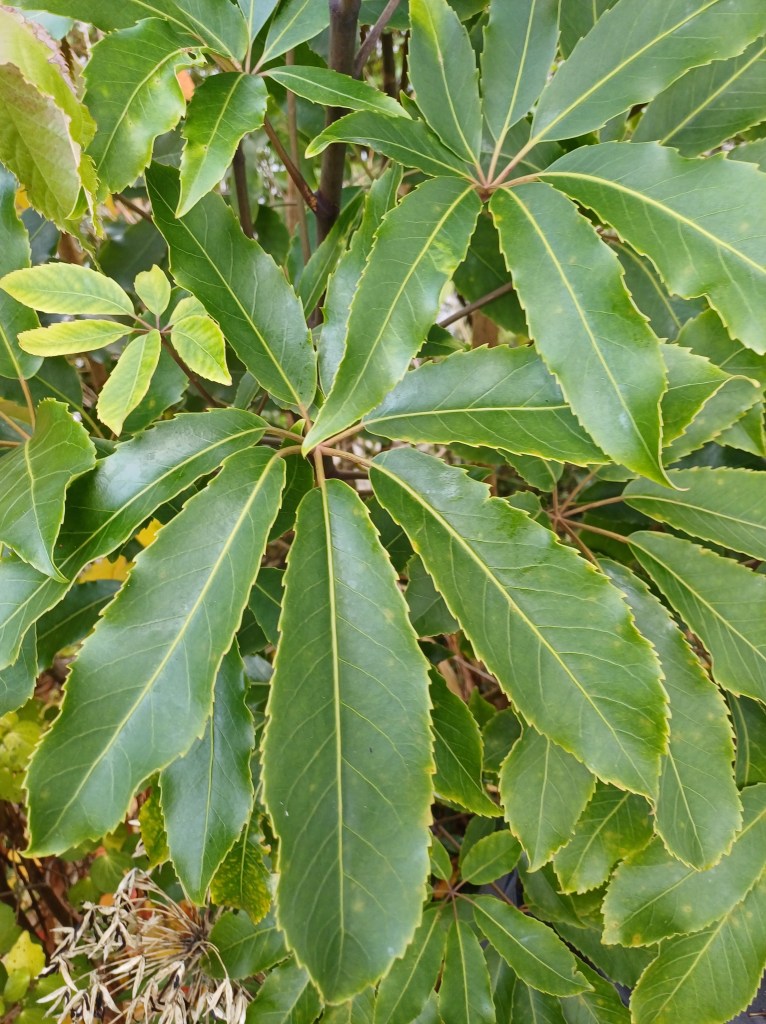
These are both common trees in the understorey layer. Though similar in appearance, they can be distinguished by their leaf texture and their leaf margins. Although the names imply seven or five leaflets respectively, this number can vary.
The texture of five-finger leaves is thicker and leathery with a glossy appearance and well-defined teeth at the edge.
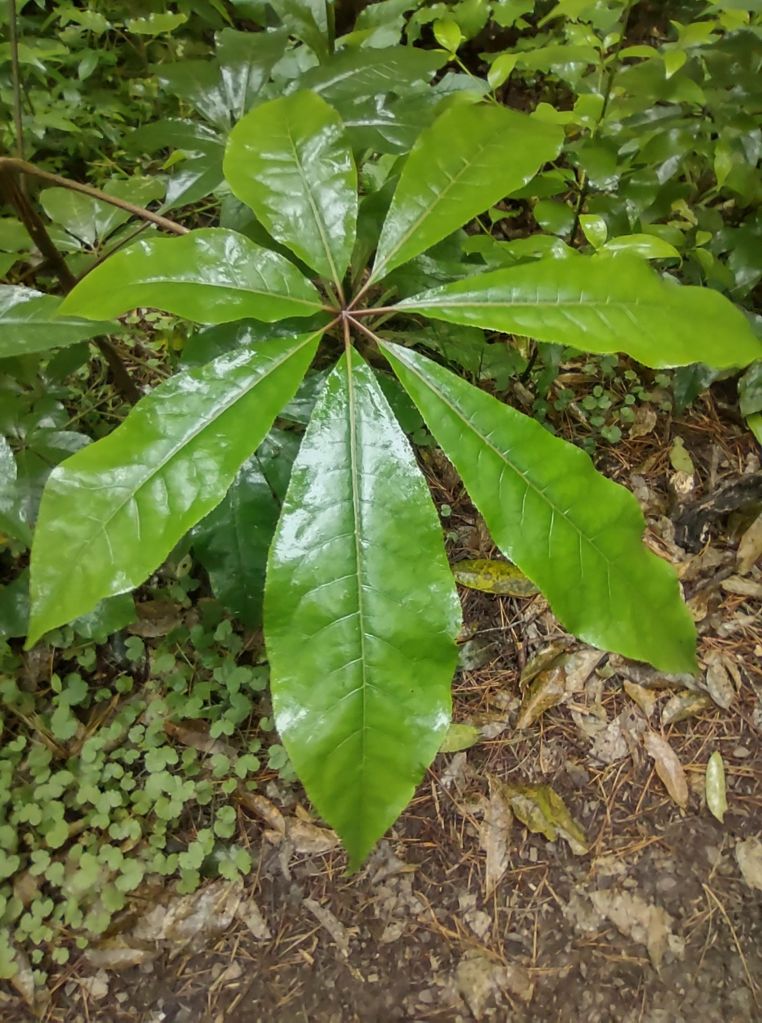
However, patē, Schefflera digitata leaves are soft and thinner, not as glossy, with very fine serrations at the edge.
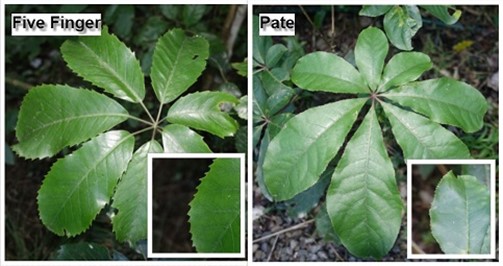
Photo: Chris Moore
Both of these endemic trees are in the top bracket of natives that provide food for bird species. They attract tūī, bellbirds (korimako) and tauhou (waxeyes). The male flowers of the five-finger (whauwhaupaku) produce abundant nectar for birds, whereas female flowers produce less nectar and instead attract mainly insects. The purple-coloured fruit is also consumed by birds.
Māori used whauwhaupaku sap for making dyes and the wood for small water vessels, while green bark was used for skids when hauling canoes. The gum, (pia houhou) was used as a sealant to help prevent leakage of water carrying vessels.
The sap of patē was used for treating ringworm, scrofula (infection of lymph nodes) and athlete’s foot. The leaves contain falcarindiol which is effective against skin disease. The wood was used to make fire by friction.
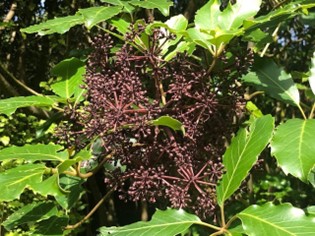
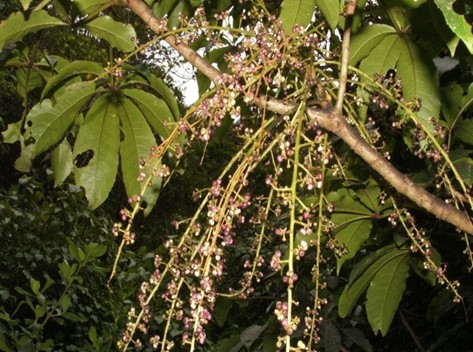
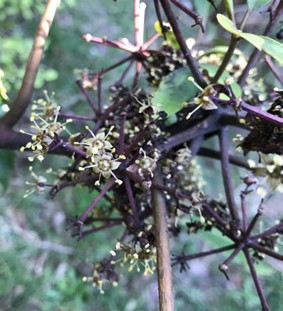
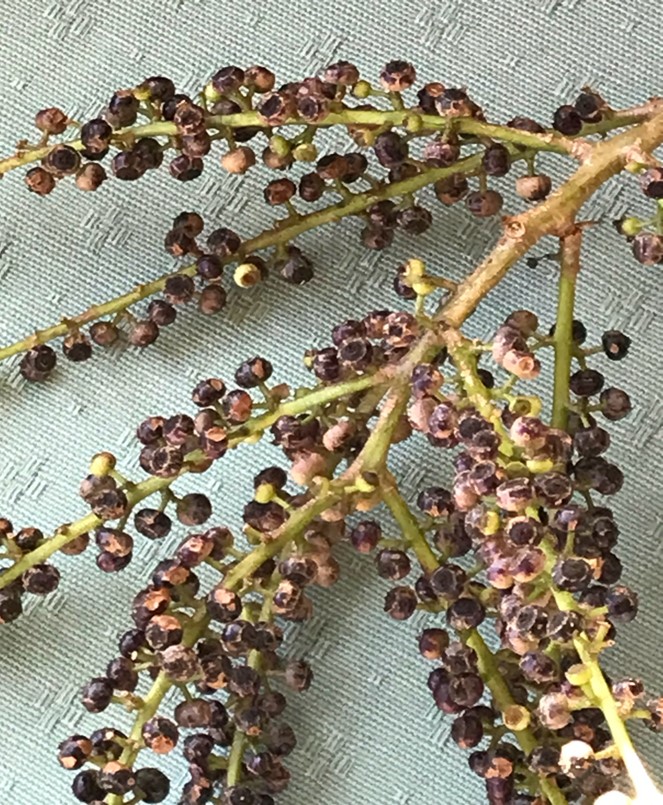
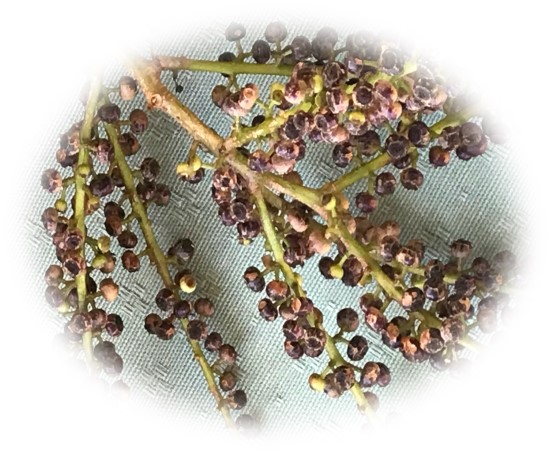
Seven-finger (patē) bear small green to cream-coloured flowers, followed by white to purple coloured fruit. As in five-finger, nectar and fruit are eaten by similar birds.

Article Source: Gil Roper Redwood Bush Tawa Book 2022 – content kindly supplied by Helen Roper

 Friends of Tawa Bush Reserves