
Source of names:
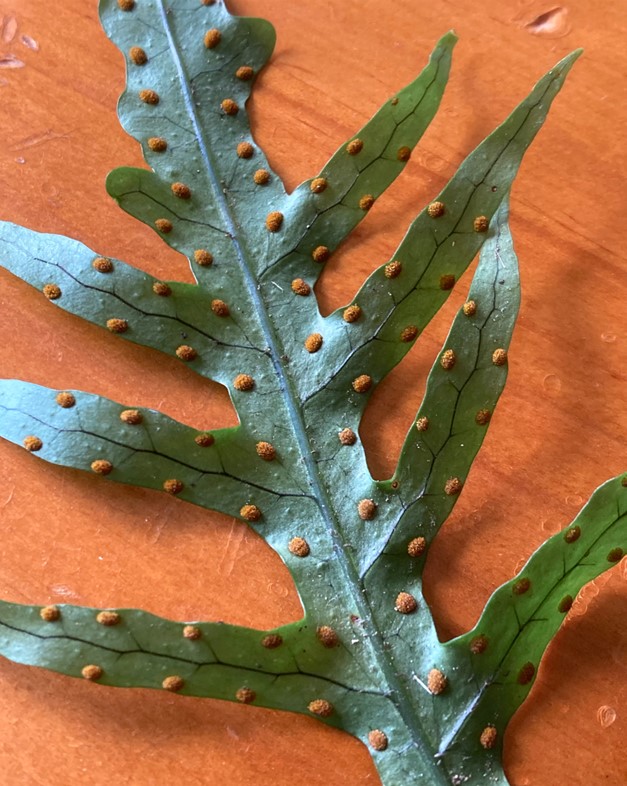
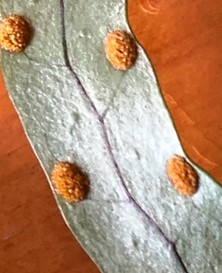
The genus Micro is from the Greek mikrós meaning ‘small’, while sorium refers to the ‘sori’ that appear as raised brown, powdery mounds on the underside of mature fronds. Sori produce clusters of sporangia and when mature, as they dry out, the sporangia fling out an abundance of spores for reproduction. The species name, scandens means ‘climbing’.
Recognition features
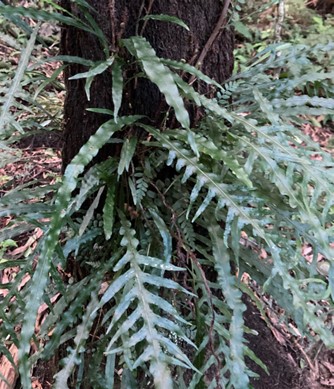
Mokimoki is a scrambling fern with creeping rhizomes and when they ascend trunks of trees, can almost smother them. Juvenile fronds are lance-like in shape while adult fronds are deeply divided. The dark, net-like veins are conspicuous on the underside of fronds and lead directly to the sori that have clusters of sporangia.
Unlike Hound’s Tongue fern (Microsorium pustulatum), mokimoki prefers damp and shaded areas and can be observed on different tree trunks near tracks in Redwood Bush.
Uses
When fresh, fragrant fern smells of freshly cut grass, while after drying, it has a more marzipan-like fragrance, rather like mildly crushed almonds. Mokimoki was used by Māori to scent hair and as a component of aromatic body oil, as well as a perfume in homes.
Article Source: Gil Roper Redwood Bush Tawa Book 2022 – content kindly supplied by Helen Roper
 Friends of Tawa Bush Reserves